Research

Respiratory circuits, astrocytes, and disease

We investigate how brainstem respiratory circuits interact with the brain networks that sustain physiology, behavior, and disease. Our work is organized around three complementary questions, moving from cellular mechanisms to their impact on brain function.

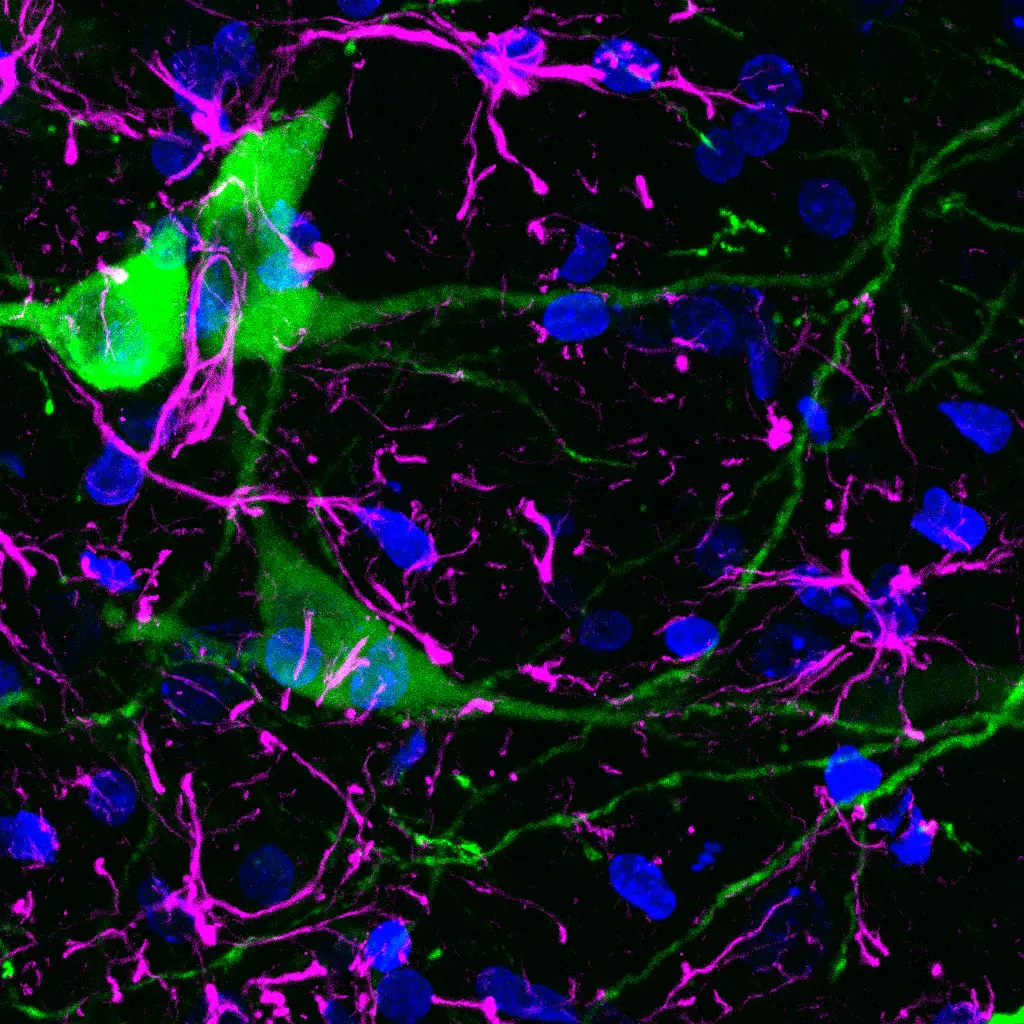
Immunofluorescence micrograph acquired in the lab and shown in the fluorophores’ original colors.
Immunofluorescence micrograph acquired by the lab. Channels are shown in their original acquisition colors; anatomy and scale will be documented with the associated experimental record.

Active question · published background

How breathing rhythm is generated and regulated

Question

Which neuronal and astrocytic mechanisms sustain breathing rhythm and cardiorespiratory homeostasis?

Working hypothesis

Astrocytes in respiratory nuclei actively regulate the circuit and contribute to its dysfunction in disease.

Systems
NTS · preBötzinger complex · Kölliker-Fuse · RTN
Measurements
Cardiorespiratory physiology · Electrophysiology · Microscopy

Context and scope

We study how neurons and astrocytes in nuclei such as the nucleus tractus solitarius (NTS), the preBötzinger complex, the Kölliker-Fuse nucleus, and the retrotrapezoid nucleus (RTN) generate and regulate breathing rhythm and cardiorespiratory homeostasis. A particular focus of our work is the role of NTS astrocytes as active modulators, and not merely support cells, in the emergence of respiratory disorders during chronic intermittent hypoxia and following cortical ischemic stroke.
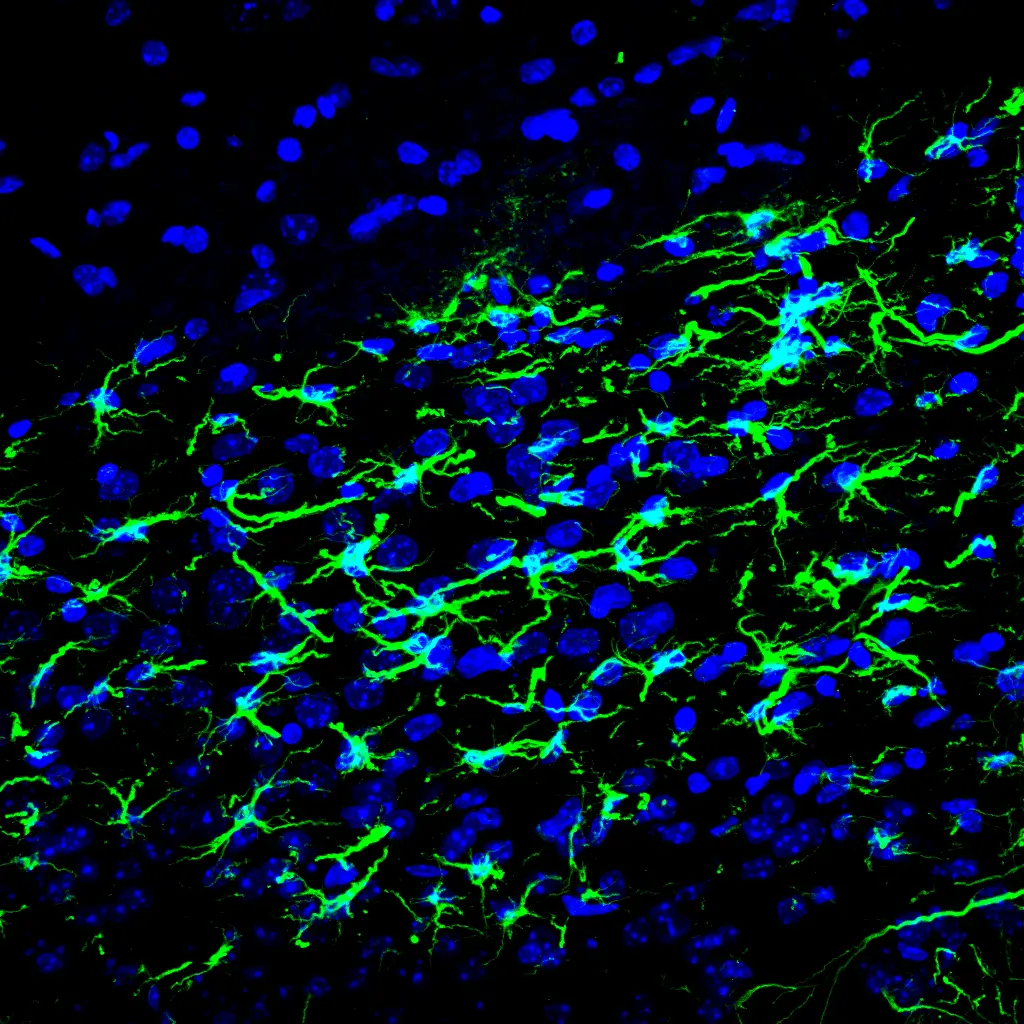
Fluorescence image produced by the lab, with scientific signals displayed against a dark background.
Fluorescence image produced by the lab. The multichannel acquisition is preserved; interpretation depends on the preparation and markers used in each experiment.

Developing research line

How breathing synchronizes brain networks

Question

How do respiratory oscillations couple with cortical and hippocampal activity?

Working hypothesis

Respiratory dynamics provide a temporal reference for brain networks involved in sleep, learning, and cognition.

Systems
Brainstem · Cortex · Hippocampus
Measurements
Multichannel LFP · Respiratory signals · Temporal analysis

Context and scope

Breathing does more than maintain homeostasis: it also organizes brain activity. We investigate how respiratory oscillations synchronize cortical and hippocampal circuits, and how this synchronization relates to cognition, sleep, and learning. In our models of chronic intermittent hypoxia and ischemic stroke, we seek to understand how astrocyte-mediated dysfunction in brainstem respiratory nuclei reshapes connectivity across these circuits.

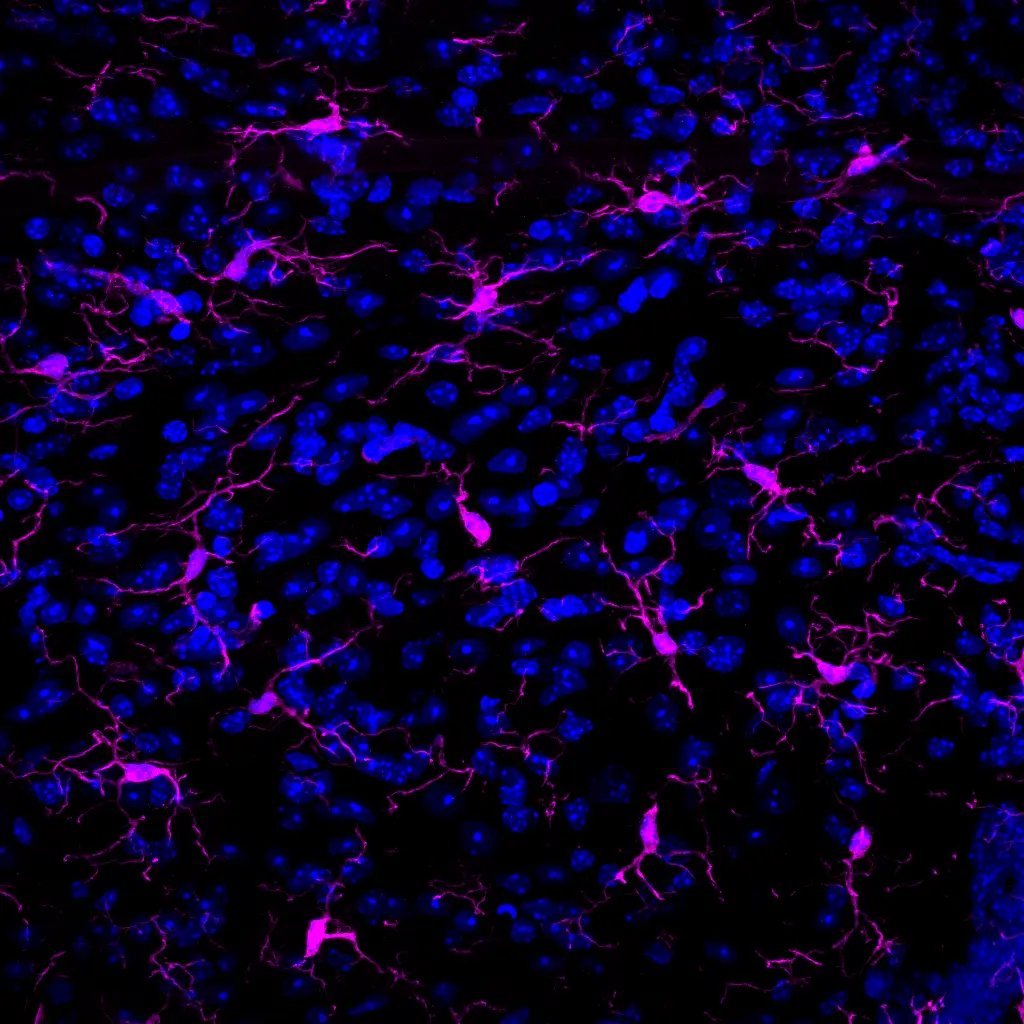
Multichannel micrograph from the lab showing fluorescent signals against a black background.
Multichannel micrograph acquired by the lab. It is presented as an experimental record without assigning markers or regions not confirmed in its metadata.

Previous evidence · new models active

What changes in disease

Question

How do breathing, brain activity, and disease progression modify one another?

Working hypothesis

Glial alterations in respiratory nuclei may connect cardiorespiratory dysfunction with brain and cognitive changes.

Systems
Chronic intermittent hypoxia · Cortical ischemia · Heart failure
Measurements
Ventilation · Autonomic control · Glial activity

Context and scope

Brain alterations can profoundly modify respiratory function, while respiratory dysfunction can, in turn, worsen the course of disease. We work with two models that address this bidirectional relationship: chronic intermittent hypoxia and cortical ischemic stroke. In both, we focus on how astrocyte-mediated alterations in respiratory nuclei affect physiology and cognition.

Funding

Current projects

These initiatives support the development of the laboratory and studies of cardiorespiratory control, astrocytes, and disease.

ANID · Academic Installation Project
No. 85250074

Academic installation of Dr. Esteban Díaz Jara… neural cardiorespiratory control in cardiometabolic and genetic diseases

Instalación académica del Dr. Esteban Díaz Jara... control neural cardiorrespiratoria en enfermedades cardio-metabólicas y genéticas
Principal investigator
Dr. Esteban Díaz Jara

End date
FONDECYT
No. 3260612

Astrocyte Activation in the Nucleus Tractus Solitarii Drives Cardiorespiratory Disorders in the Early Stages of Chronic Intermittent Hypoxia: The Role of Mitochondrial Oxidative Stress and Glutamate Spillover

Astrocyte Activation in the Nucleus Tractus Solitarii Drives Cardiorespiratory Disorders in the Early Stages of Chronic Intermittent Hypoxia: The Role of Mitochondrial Oxidative Stress and Glutamate Spillover
Principal investigator
Dr. Esteban Díaz Jara

End date